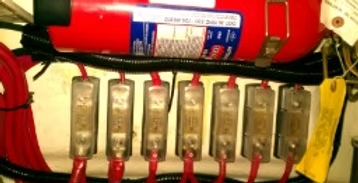
Marine Electrical Installation
Marine electrical installation brings the boat’s batteries, charging, distribution, wiring and equipment together as a usable system. We design and install new circuits, panels and complete electrical arrangements, beginning with what is already aboard and what the owner needs to run. The parts need to work together, not just look as though they will fit.
This service is about the electrical system itself: how power reaches each load, how faults are protected against and how the arrangement can be maintained. Our yacht refit page deals with coordinating wider changes and access during a refit. A new panel or charging circuit can be a defined installation job without becoming a full boat refit.
Establishing what is there before designing the addition
Existing installations can contain sound equipment alongside undocumented changes. Identify the battery banks, charging sources, distribution panels and main isolation arrangements before deciding what to retain. Labels and photographs help, but tracing and testing are needed where a conductor’s purpose or condition is uncertain.
An electrical survey can establish that starting point when the condition of the wider system is unclear. Installation design then uses the findings to decide where new work connects. It should not rely on a spare terminal merely because it is convenient or preserve an unsuitable cable because removing it would take longer.
Turning the intended use into a system plan
Describe what needs to operate together and which services must remain available when other equipment is isolated. Charging and consumption need considering in the same plan. A bank sized for modest cabin loads may not support a new inverter simply because there is physical room for the inverter case.
The design identifies the relevant supplies, circuit divisions and equipment requirements. It also considers how an owner will use the switches and understand a fault. Clear decisions at this stage help prevent a later collection of unrelated circuits, each fitted without considering the rest of the boat.
Routing cables through a moving, damp environment
Boat wiring must cope with vibration, moisture and restricted access. Cable routes need support and protection from chafe, with suitable entries through bulkheads and accessible connections where practical. A concealed shortcut across a sharp edge remains a problem even if the visible panel looks neat.
Cable choice follows the load, run and environment. The marine-versus-domestic wiring guide explains why materials and methods intended for a house should not automatically be used aboard. Separate consideration of AC, DC and data routes helps keep the arrangement understandable, rather than filling an available void with every new cable.
Making the distribution panel clear to use
A panel should show what each circuit supplies and provide the appropriate means of control and protection. Replacing the front panel alone does not correct the conductors or connections behind it. Check the loads and supply route before selecting breakers or reusing existing terminations.
Leave enough access to inspect and service the completed arrangement. Labels should identify real circuits, not descriptions inherited from equipment no longer aboard. If a new panel forms part of a larger installation, consider how it relates to battery isolation and other distribution points, so the owner is not left guessing which switch actually makes a circuit safe.
Protecting conductors and keeping supply sources separate
Circuit protection is designed around the wiring and equipment, including the fault energy available from batteries. The location of fuses and isolation matters as well as their rating. Do not increase protection ratings to make an unsuitable circuit accept a heavier appliance; the installation must be assessed for the new load.
On the AC side, shore power, inverters and generators require suitable switching, earthing and RCD arrangements. This is safety-critical work with shock and fire hazards. The installation must prevent incompatible sources from being joined, and its protective devices need testing in the intended operating arrangements, not merely checking visually.
Testing the design and explaining the completed work
Testing follows what the installation is intended to do. Circuits are identified, connections and protection checked, and equipment operation considered with its associated loads and charging sources. A device switching on is one observation, not evidence that every part of its circuit has been installed correctly.
Before using the finished system, make sure you know: which switches isolate which supplies, what settings relate to the battery chemistry and where documentation is kept. For an enquiry, send a description of the intended change and photographs of the existing panels and banks. If other yard work is planned, include it so access can be coordinated so everyone knows which work is electrical and which belongs to the yard.
Frequently asked questions
Can a distribution-panel replacement be a separate installation job?
Yes. Its scope can be defined around the panel and related circuits, provided the existing supplies and wiring are assessed rather than assumed suitable.
Why inspect existing wiring before adding a new circuit?
The new load depends on the supplies and protection behind it. Unknown connections or unsuitable conductors can undermine new equipment even when the equipment itself is correctly chosen.
Does installation design include how the switches will be labelled?
Circuit identification and usable isolation are part of making the system understandable. Labels should reflect the actual connected loads and supply arrangement.
How is this different from planning the timing of a yacht refit?
This page covers the electrical design and fitting. The refit service considers coordinating electrical changes with other work and the access created during that wider project.
Which details should accompany an enquiry about new boat wiring?
Describe the equipment or circuits being added, show the battery and panel arrangements and explain any other work that affects access. Include model information where equipment has been selected.
- Coordinating yacht refit electrics
- Marine and domestic wiring differences
- Assessing existing electrics
- Discuss a new installation
- All services
Start with the system you want to use
Describe the intended changes and show us the existing distribution and charging equipment.