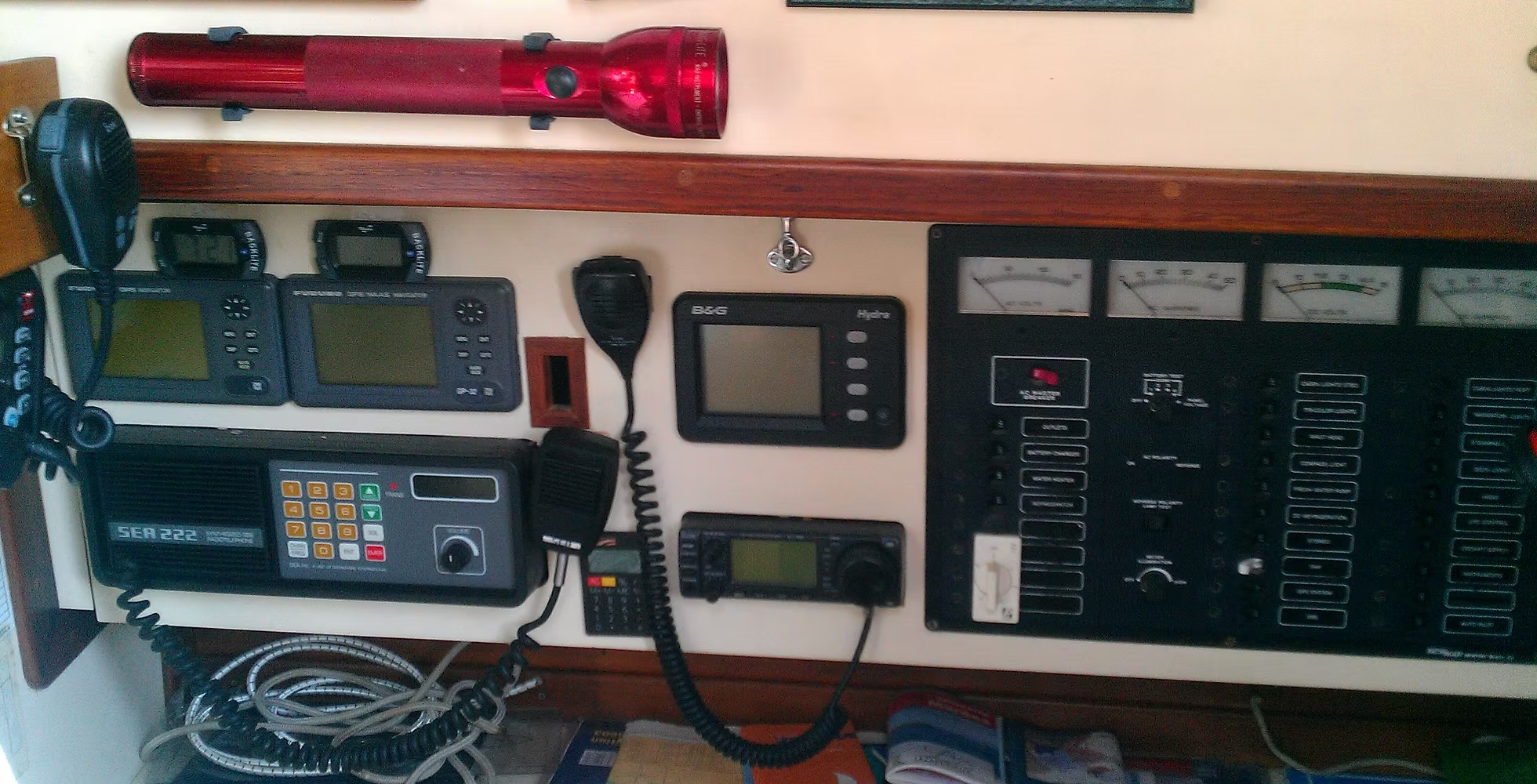
Marine Electronics Fault Finding and Repair
Marine electronics repair starts by finding whether the failure is in the unit or in the installation feeding it. We investigate power supplies, connections, data networks, antennas and cabling aboard the boat, repair installation faults and fit replacements where needed. Faulty units themselves go to their manufacturer or supplier; we do not open units for internal electronics repairs.
A blank chartplotter, missing depth reading or disappearing AIS target is a symptom, not a diagnosis. Buying a replacement before checking the installation can leave the same problem in place. Useful fault finding follows the symptom through the power and information paths, keeping equipment failure separate from wiring failure.
Recording the failure before disturbing the wiring
Note which displays fail, whether they lose power completely and what other equipment is running when it happens. A photograph of an error message or the screen state can help distinguish a restart from missing data. If a fault appears underway but not alongside, describe the conditions without putting yourself at risk to make it happen again.
Recent changes matter too. A new sensor, battery replacement or work behind a panel may alter the investigation. Keep track of what changed and when the symptom began. Avoid pulling connectors at random: doing so can introduce another problem or remove the evidence needed to identify the original one.
Following power from the supply to the instrument
Electronics can misbehave when their supply is interrupted or falls under load. The battery reading alone does not establish what reaches a display through its cable, breaker and connections. We trace that path and consider the negative return as well as the positive feed, because either side can create an intermittent fault.
Corrosion, loose terminations and damaged cable can produce symptoms that look like a failed screen. A reset when another load starts points towards a supply interaction worth testing. The repair belongs at the faulty part of the circuit, rather than simply fitting a larger fuse or repeatedly restarting the unit.
Separating network faults from missing measurements
A powered display may still have no information from a sensor or another instrument. NMEA 2000 and NMEA 0183 arrangements need their connections and device requirements understood. The investigation looks at the relevant network layout, power arrangements, cabling and how the intended information is passed between equipment.
Two plugs fitting together does not mean the equipment will work together. We identify the devices and their documented interfaces before changing wiring or configuration. Our NMEA network guide gives background on that distinction. Installation repair can restore a damaged connection or correct an integration issue; it cannot repair an internal fault inside a sealed instrument.
Checking antennas and cables beyond the display
VHF and AIS depend on more than the unit at the chart table. Antenna connections, cable condition and the route through the boat are part of the installation. A poor connection exposed to moisture can affect performance even while the display appears normal. Identifying the actual antenna arrangement helps avoid treating a radio problem as a screen problem.
Radar and other external equipment also bring exposed connections into the investigation. Access and isolation need planning before anything is opened. The VHF and AIS antenna guide explains the installation considerations; a description of cable routes and any recent mast or deck work is helpful when reporting a fault.
When a unit needs its supplier rather than an onboard repair
If checks show that the supply and installation are sound but the equipment itself has failed, the unit belongs with its manufacturer or supplier for assessment. We do not repair internal circuit boards. It helps to know that before arranging work, especially if the instrument is still covered by its supplier’s terms.
Replacement fitting may be sensible where equipment cannot be repaired or no longer suits the boat, but first check the new unit’s connections, sensors and power requirements. Our marine electronics installation service covers that work. Reusing existing cabling is a decision based on condition and compatibility, not an automatic saving.
Verifying the repaired installation in use
A repair is checked against the reported symptom. That may involve observing supply stability with other loads running, confirming data reaches the intended displays or checking the equipment starts reliably. Some faults are intermittent, so explain the conditions in which yours normally appears and any limitations on reproducing them alongside.
Do not rely on uncertain navigation equipment for a passage simply because it briefly comes back to life. Hot connectors, burning smells or damaged insulation call for isolation and professional investigation. Send the unit models, photographs and a clear fault description so the work can begin with the right installation information.
Frequently asked questions
Does your electronics repair service include opening chartplotter circuit boards?
No. We repair and fault-find the onboard installation. A failed unit requiring internal repair is referred to its manufacturer or supplier, rather than opened as a bench repair here.
What does a screen restart during windlass use suggest?
A supply interruption or voltage drop is worth investigating, but that observation does not prove the cause. The feed, return and shared connections need checking under the relevant load.
Can a working screen still have a network installation fault?
Yes. A display may receive power but not the information it expects. Device interfaces, network wiring and configuration must be checked separately from the power supply.
Should I disconnect every instrument before an investigation?
Do not change connections at random. Record the symptoms and equipment models first; unnecessary disconnection can create extra faults and make the original fault harder to find.
What happens if the wiring tests correctly but the radar unit has failed?
The unit itself needs its manufacturer or supplier’s assessment. If replacement is chosen, its installation requirements are checked before new equipment is fitted.
- Fitting replacement electronics
- Understanding NMEA networks
- VHF and AIS antenna arrangements
- Describe an electronics fault
- All services
Tell us exactly what stops working
Send the equipment models, screen messages and conditions when the fault occurs.